

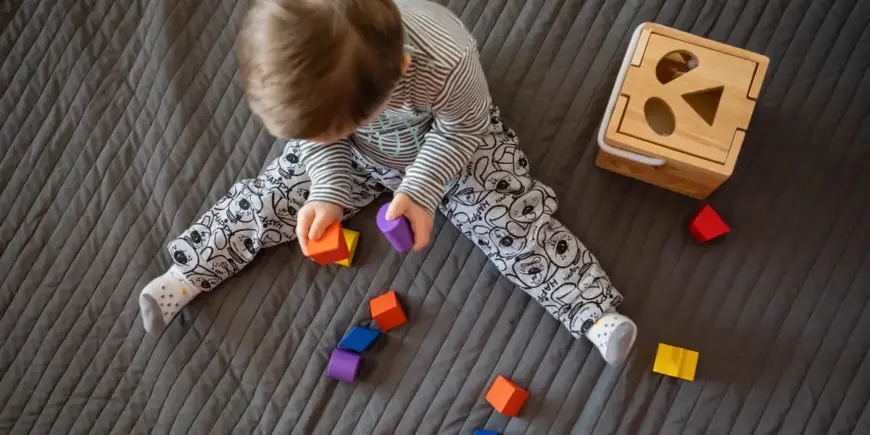
At Little Feet Montessori, we believe that young children learn best when they actively engage, stay curious, and freely explore their environment. This belief aligns naturally with play-based learning in early childhood education, where play becomes a powerful vehicle for growth, understanding, and independence.
Play-based learning does not mean a lack of structure. In a Montessori environment, play is intentional, purposeful, and thoughtfully prepared. We provide children with opportunities to explore materials, repeat activities, and make choices—all of which support meaningful learning during their most critical developmental years.
Understanding Play-Based Learning in Early Childhood Education
Play-based learning in early childhood education focuses on hands-on experiences rather than passive instruction. Children learn by doing—touching, building, sorting, experimenting, and interacting with their environment. Through these experiences, they naturally develop problem-solving skills, concentration, and confidence.
At Little Feet Montessori, we strongly connect play to real-life activities to make learning purposeful and relevant. Whether a child is pouring water, matching objects, or exploring sensory materials, each task supports specific developmental goals while feeling enjoyable and engaging.
How Montessori Supports Play-Based Learning
The Montessori philosophy provides an ideal framework for play-based learning in early childhood education. We carefully prepare our classrooms with child-sized furniture, accessible shelves, and hands-on materials that invite exploration. Children choose activities that interest them, work at their own pace, and repeat tasks until they achieve mastery.
Practical life activities such as cleaning, organizing, and self-care may look like play to a young child, but they build independence, coordination, and focus. Sensorial materials help children refine their senses, which supports future learning in math, language, and science.
Benefits of Play-Based Learning for Young Children
Play-based learning supports the whole child, not just academic development. Through this approach, children develop:
- Cognitive skills: Sorting, building, and problem-solving strengthen memory, logic, and early math understanding.
- Language development: Children expand vocabulary and communication skills as they describe actions and interact with peers.
- Social skills: Play encourages cooperation, turn-taking, empathy, and respect within a shared environment.
- Emotional growth: Play provides a safe space for children to express emotions, build resilience, and develop self-regulation.
These outcomes are central to play-based learning in early childhood education and reflect what we observe daily at Little Feet Montessori.
Play-Based Learning at Little Feet Montessori
In our Toddler and Casa Bambino programs, play-based learning is integrated into every part of the day. Educators observe children closely, introduce materials when appropriate, and step back to allow children to lead their learning. This balance supports independence while ensuring children feel supported.
Our mixed-age classrooms further enhance learning through play. Younger children learn by observing older peers, while older children build leadership and confidence by helping others.
Supporting Play-Based Learning at Home
Families can reinforce play-based learning in early childhood education at home by encouraging simple, open-ended activities. Cooking together, building with blocks, sorting everyday items, and reading books all support the same principles children experience at school.
Why Play-Based Learning Matters
At Little Feet Montessori, play-based learning is not a trend—it is a foundation for lifelong learning. By embracing play-based learning in early childhood education, we nurture confident, capable children who love to learn and feel empowered to explore their world with curiosity and joy.

 Previous Post