

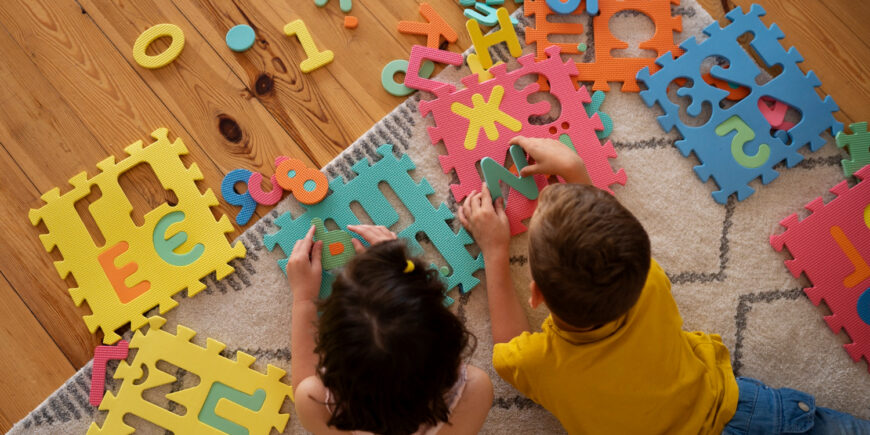
Early childhood is a powerful time of rapid growth, exploration, and brain development. Between 16 to 30 months (1.25 to 2.5 years), toddlers are in the midst of discovering their world, laying down the foundation for how they learn, interact, and express themselves. At Little Feet Montessori, our Toddler Program is designed with this magical phase in mind—offering a structured, nurturing environment that supports every area of development.
This isn’t just daycare—it’s early childhood education with purpose, passion, and proven results.
A Montessori Framework: Learning That Mirrors Life
Rooted in the Montessori philosophy, our Toddler Program embraces hands-on, child-led learning. It emphasizes freedom within structure, allowing toddlers to explore, experiment, and engage in meaningful ways. Created and guided by Shaheen at Little Feet Montessori, our program focuses specifically on categorizing and classifying, two cognitive pillars that set the stage for lifelong learning.
Let’s explore the developmental milestones that this Montessori model helps children meet—and why it matters.
1. Cognitive Development: Building Critical Thinking from the Start
Toddlers are naturally curious. Our categorizing and classifying activities harness that curiosity by introducing concepts like “same vs. different,” size, shape, and color distinctions. These foundational skills:
- Encourage problem-solving through open-ended play
- Boost observation and memory
- Lay the groundwork for logical thinking
Whether it’s sorting blocks or matching cards, toddlers begin to organize their world—one classification at a time.
2. Language Development: Words Have Meaning
When toddlers sort objects by color, shape, or function, they’re not just learning how to organize—they’re also expanding their vocabulary. Our Montessori guides introduce descriptive language during every activity, helping children:
- Name objects and their attributes
- Follow simple instructions
- Express choices and preferences
This approach naturally builds communication skills and helps children become confident little speakers.
3. Fine Motor Skills: Little Hands, Big Achievements
Montessori materials are purposefully designed to be manipulated. Chunky puzzles, stacking blocks, and art tools like crayons and brushes all support:
- Hand-eye coordination
- Grip strength and control
- Precise movements that prepare for writing later on
These tactile experiences are not only fun—they’re fundamental to toddler development.
4. Numeracy Skills: Math Concepts Begin Early
Categorization is the gateway to math. Sorting by number, size, or pattern introduces toddlers to:
- Counting and quantity
- Comparisons and sequencing
- Early addition and subtraction concepts
By engaging in activities like bead stringing or pattern play, toddlers develop a natural sense for numbers and structure.
5. Social Skills: Learning to Learn Together
Group activities like block building, role-play, or nature scavenger hunts help toddlers interact and collaborate. Through this shared learning, they:
- Learn to take turns
- Practice sharing
- Build empathy and cooperation
These early interactions are critical for emotional and social intelligence.
6. Spatial Awareness: Seeing the Big Picture
Understanding space and relationships between objects helps children:
- Grasp geometry basics
- Navigate their environment confidently
- Solve puzzles and build structures
By working with Montessori materials like stacking towers and shape sorters, toddlers begin to understand how things fit and relate.
7. Confidence and Independence: I Can Do It!
Perhaps the most important outcome of all—Montessori toddlers gain confidence. As they master tasks like cleaning up toys or completing a puzzle, they build a strong sense of self-worth and independence.
We encourage this through:
- Self-paced activities
- Opportunities for choice
- Gentle guidance that empowers rather than directs
Every small success lays the foundation for lifelong resilience and curiosity.
Recommended Montessori Activities at Little Feet Montessori
Here’s how we implement these principles in our daily curriculum:
| Activity Type | Developmental Focus |
| Sorting Games | Cognitive, Numeracy |
| Chunky Puzzles | Spatial Awareness, Fine Motor |
| Building Blocks | Creativity, Social Interaction |
| Memory Games | Cognitive Function, Focus |
| Art & Collage | Fine Motor, Expression |
| Outdoor Play | Observation, Gross Motor |
| Role-Playing Games | Language, Imagination, Social Skills |
| Pattern Recognition | Pre-Math Skills, Focus |
| Object Identification | Vocabulary, Confidence |
Each activity is thoughtfully curated to ensure it aligns with toddlers’ developmental needs while keeping learning fun and engaging.
FAQs About the Montessori Toddler Program
1. What age group is the Montessori Toddler Program for?
Our program is designed for toddlers aged 16 to 30 months (approximately 1.25 to 2.5 years).
2. How is Montessori different from traditional toddler care?
Montessori emphasizes independence, hands-on learning, and child-led exploration, rather than passive instruction or unstructured play.
3. Will my toddler be ready for preschool after this program?
Yes! The Montessori Toddler Program builds strong foundations in language, numeracy, and social skills—ideal preparation for preschool and beyond.
4. Is potty training included in the program?
We support potty learning in partnership with parents, respecting each child’s readiness and pace.
5. What is the teacher-to-child ratio?
We maintain low ratios to ensure individualized attention and safe, nurturing environments.
6. How can I enroll my child?
Visit our website littlefeetmontessori.com or contact us directly to schedule a tour and learn about enrollment options.
Conclusion: A Head Start That Lasts a Lifetime
The toddler years are the building blocks of a child’s future. At Little Feet Montessori, our Montessori Toddler Program transforms everyday moments into learning opportunities, sparking curiosity, nurturing independence, and laying the groundwork for academic and emotional success.
Choose early education that respects the child, honors development, and celebrates discovery. Choose Little Feet Montessori.

 Previous Post