

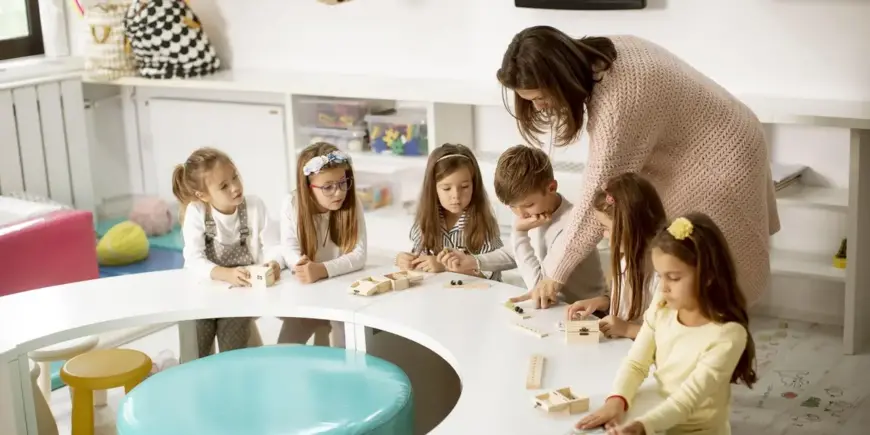
At Little Feet Montessori, we firmly believe that mixed-age classrooms play a pivotal role in a child’s development. This approach goes far beyond traditional age-segregated settings. In our Toddler to Casa Bambino programs, the mixed-age structure is intentional. It supports each child’s journey toward independence, leadership, and meaningful social connection.
The Mixed-Age Advantage
A key feature at Little Feet Montessori is the mixed-age classroom. In this environment, children from about 16 months to 6 years learn together. This approach is rooted in Montessori philosophy. Research also supports it, showing that younger children grow by observing older peers. Meanwhile, older children naturally take on roles of mentorship and responsibility.
In our programs, children see peers using materials confidently, returning them thoughtfully, and engaging in meaningful work. This natural modelling builds younger children’s confidence as they aspire to similar behaviours. Meanwhile, older children strengthen their own skills by guiding others—reinforcing their knowledge and cultivating leadership.
Building Confidence Through Community
At Little Feet Montessori, the mixed-age classroom helps build confidence in young children. They engage at their own pace, choose their work, and see their progress over time. Our website explains it clearly: “Mixed-Age Classrooms: Collaboration with older peers fosters leadership, while younger students benefit from natural peer guidance.”
Confidence grows when children experience success. This includes academic tasks, managing their environment, contributing to the classroom community, and working with peers.The mixed-age setting creates multiple opportunities for this daily growth.
Cultivating Leadership in Young Learners
Leadership isn’t reserved for adults. In our Montessori environment, older children naturally pick up roles: showing younger friends how to use a material, offering help when appropriate, and modelling calm, respectful behaviour. This dynamic is central to how our mixed-age classrooms cultivate leadership.
When a 5-year-old guides a 3-year-old through a sorting activity, they are not simply helping—they are cementing their own mastery and stepping into a leadership role. Research affirms this benefit of mixed-age settings: older children develop self-esteem and mentoring skills while younger children gain inspiration and support from seeing peers in action.
Strengthening Social Skills and Empathy
One of the most profound benefits of a mixed-age environment is how social skills flourish. At Little Feet Montessori, children of varying ages share space, materials, and experiences. As younger children watch, wait their turn responsibly, or ask for peer assistance, they learn patience and communication. Meanwhile older children practise empathy and cooperation as they support classmates.
Studies of mixed-age classrooms note these social gains: children learn to value others’ work, show compassion, and navigate interpersonal dynamics with respect and empathy.
The Why of Mixed-Age Settings at Little Feet Montessori
We design our classrooms to reflect a true community—a space where every child is known, valued, and growing together. Our mixed-age approach isn’t an add-on—it’s woven into our daily rhythm, our prepared environment, and our philosophy of promoting independence, leadership, and meaningful connection.
From an early age, children at Little Feet Montessori step into a culture where they contribute, learn, and lead. The confidence they build, the social maturity they develop, and the leadership they experience set the foundation for success—not just in school, but in life.

 Previous Post