

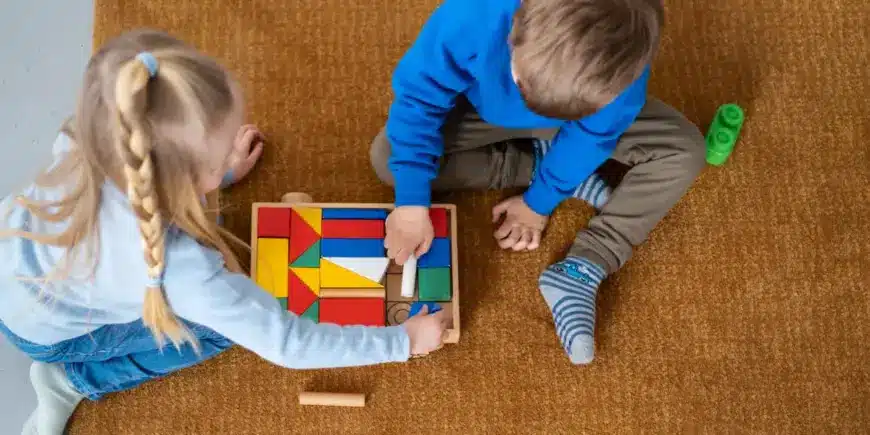
At Little Feet Montessori, we believe in the transformative power of play-based learning in early childhood. In our classrooms, children are not just passive recipients of knowledge but active participants in their learning journey. Through meaningful, hands-on play experiences, young children explore, experiment, and discover, laying the foundation for lifelong skills and academic success.
What Is Play-Based Learning in Early Childhood?
Play-based learning in early childhood recognizes the importance of play in cognitive, social, and emotional development. Rather than relying only on structured lessons, this approach encourages children to learn through open-ended activities. These activities allow children to explore, create, and solve problems freely.
In the Montessori environment at Little Feet Montessori, play-based learning blends academic concepts with everyday experiences. This supports a child’s natural curiosity and love for discovery. Children can choose their activities, work at their own pace, and learn from hands-on experiences. These elements are central to the Montessori method.
How Play-Based Learning Supports Child Development
1. Cognitive Development:
In a play-based learning environment, children develop critical thinking, problem-solving, and decision-making skills. Activities like sorting, building, and arranging materials allow children to explore math and logic concepts in a hands-on, tangible way. When they experiment with stacking blocks or matching colors, they are practicing early numeracy and pattern recognition skills.
2. Language Development:
Play-based learning also supports language development. Children grow their language skills by talking with peers and describing their actions during play. They share stories, explain game rules, and express ideas in pretend scenarios. Through these daily interactions, children build vocabulary and improve language comprehension.
3. Social and Emotional Skills:
Play encourages social interaction, cooperation, and emotional regulation. Whether working with a peer or taking turns during play, children learn empathy, patience, and conflict-resolution skills. These early social experiences help build strong interpersonal skills that remain important as children grow.
4. Fine and Gross Motor Skills:
Through play-based activities like stacking, drawing, or playing outdoor games, children develop fine and gross motor skills. These activities strengthen hand-eye coordination and help with the development of muscle control and balance.
The Montessori Approach to Play-Based Learning
At Little Feet Montessori, play-based learning in early childhood aligns perfectly with Montessori principles. Our classrooms are designed to encourage exploration and independent learning. Materials are carefully selected to promote self-directed activity, whether it’s a puzzle that challenges spatial awareness or a sensorial material that hones fine motor skills.
Children work independently or in small groups, allowing them to learn from each other and develop a sense of community. The freedom to choose work within a structured environment supports their natural desire for autonomy while ensuring that they are building key academic, social, and emotional skills.
Extending Play-Based Learning at Home
Play-based learning doesn’t have to stop at school. Parents can reinforce the benefits of play-based learning at home by offering open-ended toys, creating time for outdoor exploration, and encouraging imaginative play. Activities like building with blocks, reading together, or cooking as a family are simple ways to extend the lessons children learn in the Montessori classroom.
Conclusion: The Lasting Impact of Play-Based Learning
At Little Feet Montessori, play-based learning in early childhood is not just about having fun—it’s about fostering a love for learning that lasts a lifetime. By creating an environment where children are free to explore, create, and problem-solve, we provide them with the tools they need to succeed academically and socially.
If you’re looking for an early childhood education program that prioritizes play-based learning, Little Feet Montessori offers the perfect environment for your child to grow, learn, and thrive.

 Previous Post