

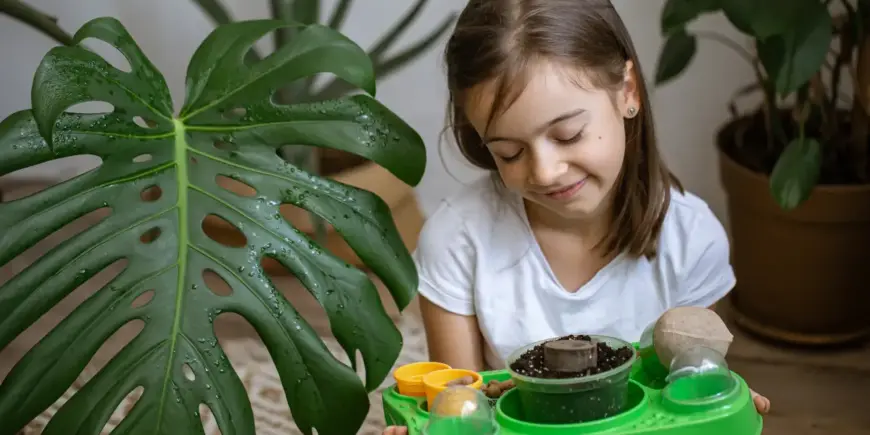
Children are naturally curious. From the moment they begin to explore their surroundings, they ask questions, observe, and experiment. At Little Feet Montessori, we nurture this instinct through the montessori learning method, creating an environment where curiosity becomes the foundation of learning.
Unlike traditional education, the montessori learning method encourages children to explore freely, follow their interests, and discover knowledge through experience. This approach supports child curiosity development and helps children build essential life skills from an early age.
Why Curiosity Matters in Early Childhood
Curiosity plays a key role in early childhood education. When children feel encouraged to ask questions and explore, they develop stronger problem-solving skills, creativity, and confidence.
The montessori learning method supports curiosity by allowing children to learn at their own pace. Instead of memorizing information, they actively engage with materials, which deepens understanding and builds long-term knowledge.
Child-Led Learning and Exploration
One of the core principles of the montessori learning method is child-led learning. Children are given the freedom to choose activities based on their interests. This naturally increases engagement and motivation.
Through learning through exploration, children become active participants in their education. For example, a child may choose to:
- Explore sensory materials like textures and shapes
- Build structures using blocks
- Sort objects by color, size, or pattern
- Engage in storytelling and imaginative play
These activities stimulate curiosity and encourage children to think independently.
Hands-On Activities That Inspire Curiosity
The montessori learning method uses hands-on materials to make learning meaningful. These materials are designed to encourage discovery and experimentation.
Examples include:
- Sensory play: Helps children understand the world through touch, sight, and sound
- Practical life activities: Tasks like pouring, cleaning, and organizing build independence and focus
- Interactive learning experiences: Puzzles and problem-solving tasks challenge thinking skills
These experiences support montessori education benefits, helping children develop curiosity while strengthening cognitive skills.
The Role of the Prepared Environment
A prepared environment is essential in the montessori learning method. Classrooms are carefully designed with accessible materials that invite exploration.
Children can move freely, choose their work, and engage with activities that interest them. This independence encourages curiosity and helps children develop confidence in their abilities.
The environment also supports concentration, allowing children to focus deeply on tasks and learn through repetition.
Teachers as Guides, Not Instructors
In a Montessori setting, teachers act as guides rather than traditional instructors. Instead of directing every activity, they observe and support children when needed.
This approach allows children to take ownership of their learning. The montessori learning method encourages children to ask questions, explore solutions, and learn through experience.
By guiding rather than controlling, teachers help nurture a child’s natural desire to learn.
Curiosity Builds Lifelong Learners
When curiosity is encouraged, children develop a love for learning that lasts a lifetime. The montessori learning method helps children become confident thinkers who are not afraid to explore new ideas.
Through curiosity-driven learning, children develop:
- Problem-solving skills
- Creativity and imagination
- Emotional confidence
- Social interaction skills
At Little Feet Montessori, we believe that curiosity is the key to meaningful education.
FAQs About Montessori Learning Method and Curiosity
1. How does the montessori learning method build curiosity?
The montessori learning method encourages exploration, hands-on activities, and child-led learning, allowing children to discover and learn naturally.
2. Why is curiosity important for children?
Curiosity supports child development by improving problem-solving, creativity, and confidence, helping children become independent learners.
3. What role does the environment play in curiosity?
A prepared environment in the montessori learning method provides accessible materials that encourage exploration and independent learning.
4. How do teachers support curiosity in Montessori?
Teachers guide rather than instruct, allowing children to explore freely while supporting their learning through observation and gentle direction.
5. What age is suitable for curiosity-based learning?
The montessori learning method supports curiosity from early childhood, as young children naturally explore and learn through experience.

 Previous Post