

At Little Feet Montessori, we know that words open the door to learning. Strong language skills help children express ideas, build friendships, and succeed academically. That is why vocabulary building for kids is an important part of early childhood education.
When children learn new words, they gain confidence and improve their ability to think, communicate, and understand the world around them.
Why Vocabulary Building Matters
Vocabulary is the foundation of child language development. Children with strong vocabularies can follow directions, ask questions, and share their thoughts clearly.
Consistent vocabulary building for kids supports:
- Better communication skills
- Stronger reading comprehension
- Improved listening skills
- Greater confidence
- Academic success
As children expand their vocabulary, they also strengthen creativity and social interaction.
Effective Vocabulary Building Techniques
Children learn new words naturally when adults create rich and engaging experiences. Here are some proven strategies for vocabulary building for kids.
Read Books Every Day
Reading introduces children to new words and ideas. Pause to discuss pictures, ask questions, and explain unfamiliar vocabulary.
Have Meaningful Conversations
Talk with your child throughout the day. Describe actions, ask open-ended questions, and encourage them to share their thoughts.
Sing Songs and Rhymes
Music helps children remember new words and improves pronunciation and listening skills.
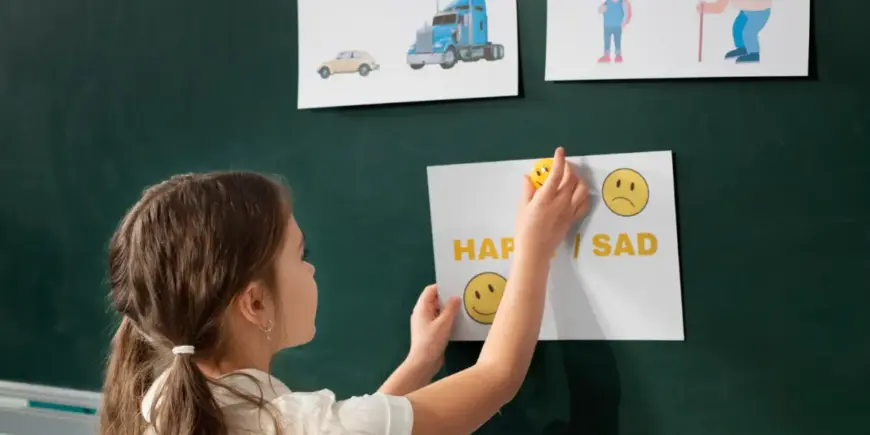
Use Flashcards and Picture Matching
Visual tools help children connect words with objects and concepts.
Encourage Sensory Play
Activities involving sand, water, or nature create opportunities to introduce descriptive vocabulary.
Storytelling and Role Play
Imaginative play supports language development and helps children use new words in context.
These language learning activities make learning enjoyable and effective.
How Montessori Supports Vocabulary Building for Kids
The Montessori approach is highly effective for vocabulary building for kids. Children learn through hands-on experiences and purposeful communication.
At Little Feet Montessori, we use:
- Object identification activities
- Classified cards
- Phonics lessons
- Storytelling circles
- Practical life experiences
These Montessori language activities connect words to real objects and experiences, helping children understand and retain vocabulary.
For example, a child sorting fruits may learn words like “banana,” “peel,” “yellow,” and “sweet.” This hands-on learning makes vocabulary meaningful and memorable.
Creating a Language-Rich Environment
Parents and teachers play a key role in vocabulary building for kids. Children learn best when they hear rich, descriptive language every day.
You can create a language-rich environment by:
- Reading together regularly
- Naming objects around the house
- Describing daily routines
- Encouraging storytelling
- Listening attentively
These simple habits support early communication skills and build a love for language.
The Long-Term Benefits of Strong Vocabulary
When children develop strong vocabularies, they communicate more confidently and understand new concepts more easily. Vocabulary growth supports reading, writing, problem-solving, and social development.
At Little Feet Montessori, we use vocabulary building for kids to help children become curious, expressive, and confident learners.
FAQs About Vocabulary Building for Kids
1. How can I improve my child’s vocabulary?
Read daily, have conversations, and use vocabulary building for kids activities like storytelling, songs, and picture matching.
2. What are the best language development activities?
Reading, rhymes, sensory play, and Montessori language activities are excellent for vocabulary building for kids.
3. How does reading help vocabulary growth?
Books introduce new words in meaningful contexts, making vocabulary building for kids both natural and enjoyable.
4. How does Montessori support language development?
Montessori language activities use hands-on materials and real objects to strengthen vocabulary and communication skills.
5. What age should vocabulary building begin?
Vocabulary building for kids begins in infancy and grows rapidly during the toddler and preschool years.
At Little Feet Montessori, we nurture language development through meaningful conversations, engaging activities, and hands-on learning. Through consistent vocabulary building for kids, children gain the words they need to communicate with confidence and joy.

 Previous Post