


Montessori Materials vs. Toys: A Balanced Perspective by Shaheen Khalfan
As an educator with over 25 years of experience and the founder of Little Feet Montessori School, I’ve encountered countless discussions about Montessori materials and their comparison to toys. This question has sparked thoughtful debate across forums, classrooms, and parenting circles. I believe the distinction lies not just in their design but in the intent and philosophy behind their use.
Understanding Montessori Materials: Purposeful Tools, Not Toys
Maria Montessori, the pioneer of this educational approach, famously referred to play as the child’s work. The Montessori materials were designed with a deliberate, careful purpose to complement the Montessori curriculum. This curriculum is rooted in the principles of natural child development and seeks to support learning through hands-on exploration and discovery.
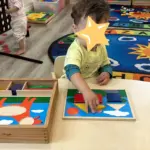
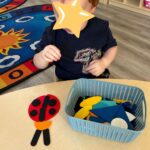
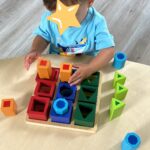
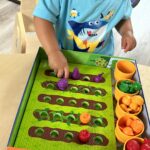
Montessori materials aren’t just objects; they are tools that isolate specific skills and concepts, enabling children to focus deeply and master them. Take the Pink Tower as an example—it’s not a toy for stacking blocks; it’s a tool for understanding size, sequence, and precision.
Maria Montessori spoke frankly about toys, emphasizing that they could never replace real-world experiences. For instance, a play kitchen cannot replicate the benefits of a child actively participating in meal preparation with their own child-friendly tools. These real-life activities teach skills, foster independence, and instill confidence.
Toys in a Montessori Environment: Finding Balance
However, I firmly believe that toys and Montessori materials don’t need to exist in opposition. Creative play has its place in a child’s development, offering opportunities for imagination and self-expression. Children naturally seek real-world experiences when they are made accessible. Yet, they can also find joy and learning in imaginative play with thoughtfully chosen toys.
The key is balance. An accessible environment—one that offers both authentic experiences and opportunities for creative exploration—is vital. Children benefit most when their innate curiosity is respected and their freedom to explore is supported.
The Role of the Adult: Time and Freedom
As educators and caregivers, the greatest gifts we can offer a child are our time, attention, and the freedom to explore their world. By ensuring that their environment is rich with opportunities for both real-world engagement and creative play, we meet their developmental needs holistically.
I have seen children thrive when given the chance to cut fruit in the kitchen, sweep a floor, or tend to a garden. These activities teach life skills while instilling a sense of responsibility and achievement. At the same time, imaginative play with toys—when chosen thoughtfully—can enhance creativity and social skills.
FAQs: Montessori Materials and Toys
Q: Are Montessori materials toys?
A: Montessori materials, however, are not toys. They are intentionally designed educational tools that align with Montessori principles, focusing on skill-building and sensory learning.
Q: Can toys be part of a Montessori home or classroom?
A: Yes, toys that align with Montessori values—such as simplicity, open-ended use, and fostering creativity—can complement a Montessori environment.
Q: Why does Montessori emphasize real-world experiences over toys?
A: Real-world activities provide hands-on learning opportunities, build life skills, and satisfy a child’s natural developmental needs. Toys, while valuable, cannot replace these authentic experiences.
Q: What makes Montessori materials unique?
A: Montessori materials are designed to isolate one concept, encourage self-correction, and promote deep focus and independent learning.
Q: How do I create a balanced environment for my child?
A: Provide access to real-world activities like cooking or gardening, and supplement these experiences with simple, purposeful toys that encourage creativity and problem-solving.
Conclusion
At Little Feet Montessori School, we embrace Maria Montessori’s vision while recognizing the value of creative play. Our goal is to nurture children who are confident, curious, and capable by providing an environment that supports their need for both real-world engagement and imaginative exploration. We have a uniquely crafted approach and have consciously decided to opt out of the CWELL program. This choice underscores our commitment to the highest educational standards and ensures that our curriculum focuses on what truly benefits our students: personalized care and enriched learning experiences.
As a parent or educator, your role in balancing these aspects is pivotal. Together, we can create enriching environments where children can thrive—where Montessori materials and toys coexist to serve the developmental needs of the whole child.
—Written by Shaheen Khalfan, Founder, Little Feet Montessori School

 Previous Post